Updated September 2026 to reflect current guidance on food allergy testing.
IgE and IgG are both types of antibodies, but they mean very different things when it comes to food allergy.
If you’ve been looking into allergy testing, you may have come across IgE blood tests alongside commercial IgG “food sensitivity” or “food intolerance” tests. Understandably, it can be difficult to know what the difference is or which tests are actually useful.
The simple answer is that IgE can be involved in immediate food allergy. Food-specific IgG, on the other hand, is not considered a reliable way to diagnose food allergy or food intolerance.
In this guide, I’ll explain the difference between IgE and IgG, how IgE-mediated food allergy is usually assessed, and why IgG food tests are not recommended for diagnosing food allergy.
What does IgE mean in food allergy?
IgE stands for Immunoglobulin E. It is an antibody involved in immediate allergic reactions.
In IgE-mediated food allergy, the immune system reacts to a food protein and produces specific IgE antibodies against it. When that food is eaten again, this can trigger the release of chemicals such as histamine and cause an allergic reaction.
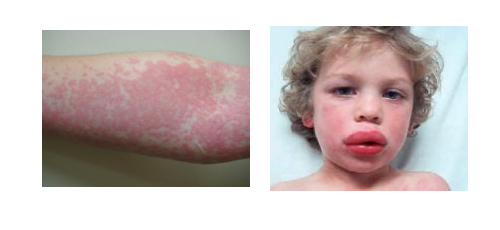
Symptoms usually happen quickly, often within minutes and generally within around two hours of eating the food.
They can include:
- hives or an itchy rash
- swelling of the lips, face or eyes
- vomiting or tummy symptoms
- coughing, wheezing or breathing difficulties
- in more severe cases, anaphylaxis
If your child develops breathing difficulties, significant swelling, becomes very unwell or you suspect anaphylaxis, seek emergency medical help.
How is IgE-mediated food allergy diagnosed?
If your child has symptoms that sound like an immediate food allergy, the first step is usually an allergy-focused history.
This means looking carefully at things like:
- what food was eaten
- how much they had
- how quickly symptoms started
- what the symptoms looked like
- whether it has happened more than once
- whether there are any other allergies or eczema
From there, a healthcare professional may recommend a skin prick test or a blood test for specific IgE antibodies to the food that is suspected.
The important bit to understand is that a positive allergy test does not automatically mean your child has a food allergy.
It can show that their immune system is sensitised to that food, but the result still needs to match what actually happens when your child eats it. That’s why the history is so important.
Sometimes, if the history and test results don’t give a clear answer, a specialist may recommend an oral food challenge. This is carried out under medical supervision and can help confirm whether a child is allergic or whether they may have grown out of an allergy.
If you’ve been given allergy test results and aren’t sure what they actually mean for your child, this is where individual assessment can be really helpful.
Skin prick tests and IgE blood tests: what do the results actually mean?
This is where allergy testing can get confusing.
A skin prick test or specific IgE blood test can show that your child’s immune system has made IgE antibodies to a particular food.
But a positive result does not automatically mean they will react when they eat that food.
This is called sensitisation.
The test result needs to be looked at alongside your child’s actual symptoms and allergy history. For example, if a blood test shows raised IgE to peanut but your child eats peanut regularly with no symptoms, the test result on its own would not mean they have a peanut allergy.
The same applies to the size of a skin prick test or the number on a blood test. Higher results can sometimes make an allergy more likely, but they do not reliably tell you how severe a future reaction might be.
This is why I would never recommend interpreting an allergy test result in isolation.
If your child has had testing and you’re unsure whether a result is actually clinically relevant, getting the full picture from their symptoms, history and current diet is really important.
What is IgG — and is it linked to food allergy?
IgG stands for Immunoglobulin G. It is another type of antibody made by the immune system.
Unlike IgE, IgG is not used to diagnose immediate food allergy.
In fact, finding food-specific IgG antibodies in the blood can simply mean that the immune system has been exposed to that food before. It does not mean that the food is causing an allergy or intolerance.
This is where commercial “food sensitivity” tests can become confusing for parents.
Some tests measure IgG antibodies against lots of different foods and then give you a list of foods to avoid. The problem is that these results are not considered a reliable way to diagnose food allergy, food intolerance or food sensitivity.
So if a test says your child has raised IgG to milk, egg, wheat or soya, that result on its own does not mean those foods need to be removed from their diet.
And for children, unnecessary food restriction can cause its own problems, particularly if several important foods are removed at the same time.
Why aren’t IgG food sensitivity tests recommended?
I completely understand why these tests can look appealing.
If your child has ongoing tummy symptoms, eczema, changes in their poo or you just feel that something isn’t quite right, a test that promises to identify the problem foods can sound like a really easy answer.
The difficulty is that IgG testing doesn’t actually tell us whether a food is causing those symptoms.
Food-specific IgG can be found simply because someone has eaten that food before. So a long list of “positive” foods can sometimes reflect normal exposure rather than foods that need to be avoided.
This is why professional allergy organisations do not recommend IgG testing to diagnose food allergy or food intolerance.
The concern, particularly in babies and children, is what happens next.
If several foods are removed based only on an IgG result, it can make their diet unnecessarily restrictive and may affect things like:
- energy intake
- protein
- calcium
- iron
- vitamins and minerals
- growth
- how confident they feel around food as they get older
That doesn’t mean a child’s symptoms should be ignored. It means we need to work out what is actually going on rather than removing lots of foods because they appear on a test result.
If your child is having symptoms after eating, the important part is looking at the pattern — what they eat, what symptoms happen, when they happen and whether there is a consistent relationship between the two.
That’s often where an individual allergy assessment becomes much more useful than a broad food sensitivity panel.
IgE vs IgG: what’s the main difference?
The simplest way to think about it is this:
IgE can be involved in immediate food allergy.
IgG is a different type of antibody and food-specific IgG testing is not used to diagnose food allergy or food intolerance.
With IgE-mediated allergy, symptoms usually happen quickly after the food is eaten and may include things like hives, swelling, vomiting or breathing symptoms.
IgG results are very different. Finding IgG antibodies to a food can simply mean your child has been exposed to that food before. It does not tell us that the food is causing their symptoms.
That’s why an IgE result may form part of an allergy assessment, whereas an IgG “food sensitivity” panel should not be used on its own to decide which foods your child needs to avoid.
The really important bit is that no test should be looked at in isolation. Your child’s symptoms, timing, reaction history and what they are actually eating all matter.
And if the picture is unclear, that’s where an individual assessment can be much more helpful than trying to interpret a test result on its own.
When should I get help with possible food allergy?
If your child is having symptoms after eating, or you’ve been given allergy test results that you’re not sure how to interpret, it’s important to look at the whole picture rather than one test result on its own.
Things like the timing of symptoms, what food was eaten, how much was eaten, whether the reaction has happened before and what your child is currently eating all matter.
If you’re unsure whether your child’s symptoms could be related to food allergy, or you’re worried about removing foods unnecessarily, I can help you work through this in a food allergy consultation.
If your child has breathing difficulties, significant swelling, becomes very unwell or you suspect anaphylaxis, seek urgent medical help.

Hannah Whittaker RD is a specialist paediatric allergy dietitian with over 20 years’ experience in nutrition and 10 years as a Registered Dietitian. She specialises in food allergy in babies and children, including cow’s milk, egg, soya, wheat, peanut and tree nut allergy, food reintroduction and nutritional adequacy.
Hannah has worked in NHS paediatrics and now supports families with practical, evidence-based nutrition advice. She is also an experienced media spokesperson and has contributed to publications including The Sunday Times, The Independent and Huffington Post.
Credentials
Registered Dietitian
First Class Degree in Nutrition
Postgraduate qualification in Dietetics
Experience
Over 20 years’ experience in nutrition
10 years as a Registered Dietitian
NHS paediatric dietetics experience
Media spokesperson in the UK and internationally
Writer, committee member and researcher supporting the British Dietetic Association